
OPENING
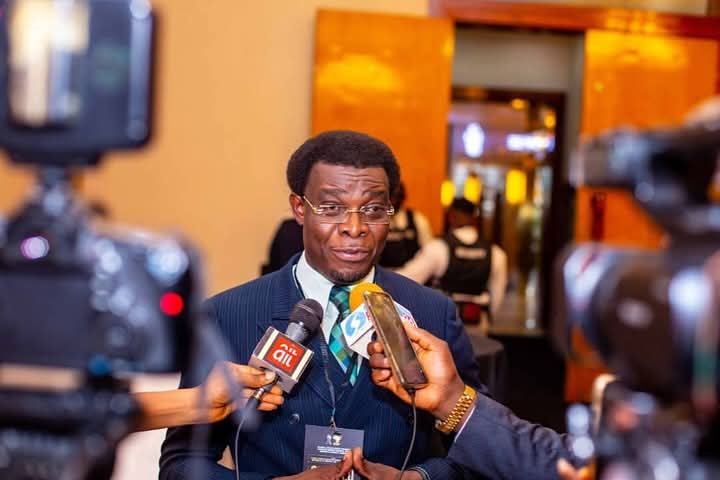
REMARKS BY PROFESSOR TUNJI JOHN ASAOLU DURING THE AFRICAN UNION AGENDA 2063
SECURITY SYMPOSIUM IN ABUJA ON 20TH JUNE, 2025.
Protocols:
Honorable dignitaries, esteemed guests, and ladies and Gentlemen present here
today,
I would like to
begin by welcoming and acknowledging the distinguished individuals gathered in
this room, whose commitment to the well-being of our nation inspires us
all. Let me extend my heartfelt
appreciation to
the AU Strategy and Risk Management Committee led by Amb. Dr. Mustapha Adeolu
for convening such a timely and important gathering. The relevance of our
discussions today could not be overstated.
Emphasizing
Agenda 2063
Ladies and
Gentlemen, it is paramount to emphasize that our organization is committed to
promoting the African Union's Agenda 2063. In this Agenda, specifically,
Aspiration Number 4 highlights the need for a peaceful and secure Africa. This
ambition underpins
he various peace and security architectures of the African Union, and it is
incumbent upon Nigeria to observe and implement these frameworks diligently.
The framework is to shape policies that promote peace, security, and stability
across the continent.
Also, to reflect
on the African Union's theme for the year 2020 which was "Silencing the
Guns: Creating Conducive Conditions for Africa's Development". This
theme was part of the broader "Silencing the Guns by 2020"
initiative, aiming to end all wars and conflicts on the continent by the end of
that year.
The initiative also emphasized creating conditions that would foster Africa's
development, which is fundamentally linked to peace and security but rather
than the guns to be silenced, it becomes even more lauder.
The question now
is for how
long will we continue to wake up to news of lives lost to terrorism,
kidnapping, and banditry? How many more families must endure the tormenting
grief of losing loved ones to violence?
Recent
Tragedies
We have faced
numerous tragedies across our nation recently — from the heartbreaking incidents
in Benue and Plateau to the devastating attacks in Imo and Bonn and Zamfara.
Each story of loss serves as a stark reminder of our reality.
We must
acknowledge the pain, trauma, and displacement inflicted upon thousands of
innocent Nigerians, whose everyday lives have been turned upside down. This
anguish is not just felt in isolated regions; it has spread like wildfire
throughout our nation.
National
Problem
Insecurity is no
longer a regional problem; it’s a national crisis that threatens the fabric of
our society. Nigeria’s peace, unity, and sanity have been under threat for far
too long. Yes, we agreed that insecurity is not peculiar to Nigeria
alone—indeed, many countries grapple with similar issues— but do we sit backand
watch our beloved nation collapse under the weight of these crises?
Impact
on Society
These atrocious
crimes disrupt education, cripple food systems, deter investment, and derail
democratic development. The repercussions are deeply felt, as our economy
grapples with instability and uncertainty. Agricultural instability prevails
due to unsafe rural communities, threatening our food security. We see youth
radicalization emerge from despair, driving increased emigration and brain
drain. Public trust in governance is eroded as citizens feel abandoned in the
face of adversity, and so on and on.
Call
to Stakeholders
In light of these
challenges, I call upon all stakeholders present today and out there to let us
engage in a multi-stakeholder approach from:
- Traditional leaders, whose wisdom can guide local efforts.
- Security agencies, who are on the front lines of our safety.
- Civil society, which plays a crucial role in advocacy and support.
- Local communities, whose insights are invaluable.
- Policy think tanks, whose expertise can pave the way for effective strategies.
The time has come
for us to seek healing and bring an end to the needless bloodshed that has
gripped our nation. Therefore, let us unite in our resolve to implement
effective strategies for conflict resolution, establish community-led safety
nets, and strengthen our relationships with local and international partners
committed to peace.
Together, we have the power to transform the narrative from one of despair to
One of hope and resilience.
Way
Forward
As we look to the
future, let us reaffirm our faith in Agenda 2063 as a roadmap to “The Africa We
Want.”
I urge everyone present to leave this gathering with clear action points, a
renewed resolve, and concrete commitments to make Nigeria a land of hope and
peace.Together, let us forge
Thank you for
your attention, and let us work hand-in-hand towards a peaceful, secure, and
prosperous Africa!a path to a safer, more secure Nigeria for all.
Thank you. God
bless
Nigeria and God bless Africa
Amb. Prof. Tunji John ASAOLU,fidir, fimc, midpm
Professor
of
Politics & International Studies,
Chairman
of the Governing
Council,
African
Union Agenda 2063
Ambassadorial Assembly
Comments are closed